

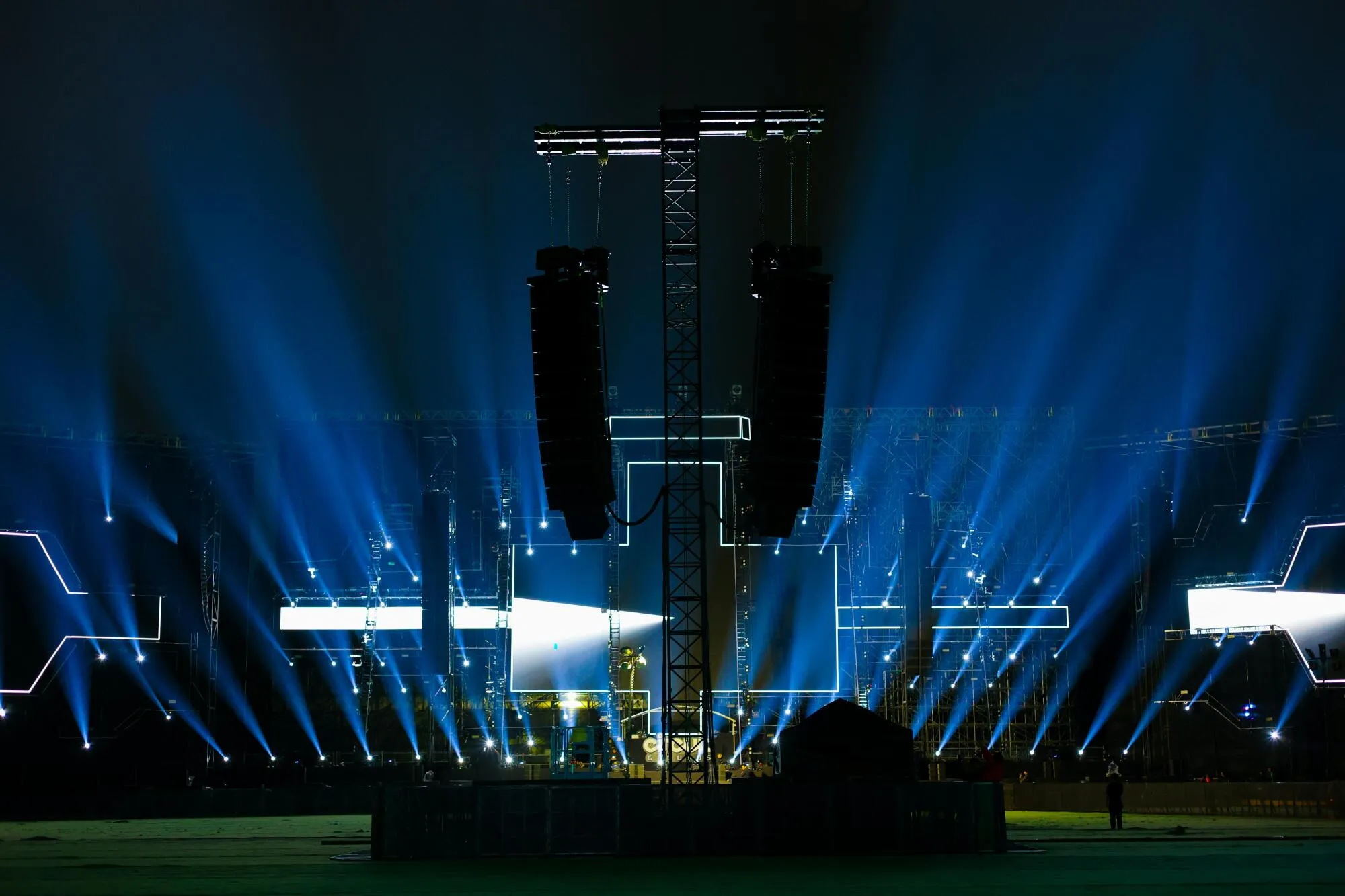
Immersive stage production is reshaping Hip-Hop performances by turning concerts into full-sensory environments where the music is only one part of what fans experience. The days of an artist with a mic, a DJ, and a spotlight are still present, but the ceiling has moved dramatically. From Kendrick Lamar’s Super Bowl LIX halftime show to the elaborate production architecture that defined tours by Travis Scott, Beyoncé, and Jay-Z, the Hip-Hop concert has transformed into something closer to a cinematic event.
Live Nation’s 2024 earnings report confirmed 151 million fans attended over 50,000 events (a 4% year-over-year increase) and tied that growth explicitly to audience demand for premium live experiences. The arms race for better stage production techniques is happening because fans vote with their tickets.
What Is Immersive Stage Production?
Immersive stage production means designing a performance environment where the audience experiences the show from multiple sensory dimensions simultaneously. Not just sound and image on a screen, but light, movement, spatial architecture, and atmosphere that surround them. It’s the difference between watching a performance and being inside one.
Hip-Hop has leaned into this harder than almost any other genre because the culture has always demanded that the presentation match the magnitude of the music.
The production elements driving the biggest moments in today’s Hip-Hop concert innovations include:
- Full-scale LED volumes that wrap entire stages in programmable visual environments
- Pryotechnics and aerial rigging that create vertical space and physical drama
- Custom automated staging that transforms the performance area mid-show
- Holographic and projection mapping that brings departed artists or visual characters to life
- Real-time camera and video integration that creates an IMAX-like experience from every seat
Each of those elements requires specialists who understand both the technical requirements and the artistic vision. The gap between a good show and an unforgettable one often comes down to who built the room.
Why Hip-Hop Specifically Drives Production Innovation
Hip-Hop has always been the genre most willing to spend on a grand show. From Run-DMC’s stripped-down energy to Kanye West’s Saint Pablo tour, where the artist performed on a floating stage, the culture’s relationship with performance scale has always been ambitious. The artists who command the largest audiences understand that production is part of the artistic statement; the visual environment is as intentional as the tracklist.
How Does Lighting Affect a Concert Performance?
Lighting is the variable that connects everything else on stage. A production can have a million-dollar LED wall and still feel flat if the lighting design doesn’t direct the audience’s attention correctly or create the right emotional atmosphere at the right moments. Lighting is the grammar of a live performance; it tells the audience:
- Where to look
- What to feel
- When the moment has arrived
With Hip-Hop specifically, lighting controls energy in real time in a way no other production element can replicate alone. A rapid strobe sequence during an 808-driven track hits differently than a warm color wash during a slower moment, and the skill of the lighting director determines where those transitions feel intentional. The global Pro AV market, which covers professional lighting and audiovisual services, is projected to grow at a 12% CAGR through 2032, driven by the explosion in demand for sophisticated live event production.
What Major Markets Are Leading the Production Shift
New York, Los Angeles, Atlanta, and Las Vegas are the cities where Hip-Hop production innovation gets stress-tested at scale. Las Vegas, in particular, has become the live production capital of the world following the opening of the Las Vegas Sphere and the growth of its residency and touring concert infrastructure. For production teams staging major Hip-Hop events, working with a skilled Las Vegas lighting technician is the difference between a production that photographs well and one that delivers in the room.
What Technology Is Used in Modern Stage Productions?
The technology stack behind a major Hip-Hop concert would have looked like science fiction twenty years ago. Extended Reality (XR) stages (the same LED volume technology used on film sets) allow artists to perform inside fully rendered virtual environments visible to both the live crowd and the streaming audience simultaneously. Real-time rendering engines usually process visual outputs at 60 frames per second or higher, meaning the production responds to live inputs rather than playing back a pre-recorded sequence.
Tupac’s hologram at Coachella 2012 cost an estimated $100,000 to $400,000 and lasted two and a half minutes. The technology has since become both more capable and more accessible, with production companies now offering extended holographic appearances as a standard tour feature rather than a one-off experiment.
The Hip-Hop community has also used production technology for cultural commentary. Kendrick Lamar’s Super Bowl halftime show used staging, lighting, and video to deliver a pointed visual statement that extended well beyond entertainment. When production technology serves a message that specific, it elevates what live performance can communicate entirely.
Frequently Asked Questions
How Much Does It Cost to Produce a Major Hip-Hop Concert?
Major touring Hip-Hop production budgets range from $500,000 per show for large arena productions to several million for stadium-scale events with full custom stage builds. Lighting, LED infrastructure, rigging, and crew costs account for a significant portion of those figures, with festival-level productions typically running the highest daily costs due to build and teardown timelines.
What Is the Role of a Lighting Director In a Concert?
A lighting director designs and executes the entire lighting language of a live performance, programming cues, operating the board during the show, and coordinating with stage management and the artist’s creative team. On major Hip-Hop tours, the lighting director often collaborates directly with the artist and creative director during rehearsals to align the visual grammar with the music’s emotional arc.
Stage Production Is Now Part of the Artistic Statement
The greatest hip-hop performances of this era aren’t just fun shows; they’re modern concert experiences that audiences carry with them. Stage production has evolved from a supporting element into a core component of how Hip-Hop artists express themselves at scale. The immersive technology in music is advancing, audience expectations are rising, and the productions that meet that moment are the ones people remember for years.
Continue exploring this site to access more Hip-Hop, culture, and live performances content.
