

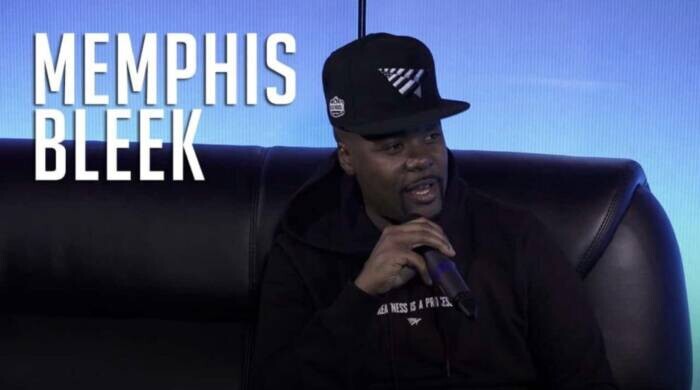
From battle rap and major-label dreams to incarceration, activism and community leadership, Mysonne’s appearance on Memphis Bleek’s ROC Solid isn’t merely another rapper interview. It is two veterans of New York culture examining what happens when the music stops, life gets real, and the man behind the microphone has to decide what his voice is actually worth.
There is a moment in every man’s life when his résumé stops being the most interesting thing about him.
The records matter.
The battles matter.
The money matters.
The mistakes matter.
The years that disappeared matter.
But eventually a harder question arrives:
Who did all of it make you become?
That is the question hovering over the latest episode of ROC Solid with Memphis Bleek, featuring Bronx rapper, activist and community leader Mysonne.
Released July 21, 2026, the episode runs approximately 45 minutes and is presented by the Drink Champs Network, with ROC Solid distributed by The Black Effect Podcast Network and iHeartPodcasts. The official description frames the conversation around Mysonne’s struggle, redemption, music, incarceration, rebuilding, fatherhood, authenticity, activism, mentorship and the responsibility attached to having a voice in hip-hop.
That description tells you what they discuss.
It doesn’t fully explain why the conversation matters.
Because the significance is in the pairing.
Memphis Bleek isn’t interviewing Mysonne as an outsider studying New York hip-hop.
He comes from the culture Mysonne is describing.
Bleek has survived his own journey through one of the most scrutinized chapters of New York rap history. He knows what major-label expectations feel like. He understands loyalty, fame, neighborhoods, industry politics, friendships, money, opportunity, disappointment and the strange experience of living long enough to hear younger generations turn your youth into history.
And Mysonne?
Mysonne has a story that refuses to fit comfortably into one category.
Rapper.
Battle MC.
Major-label prospect.
Incarcerated man.
Father.
Activist.
Mentor.
Community leader.
Those aren’t separate biographies.
They belong to the same person.
And when Memphis Bleek places a microphone in front of him on ROC Solid, the result isn’t compelling because two rappers are remembering the old days.
It’s compelling because two grown men are trying to understand what the old days produced.
THIS ISN’T THE INTERVIEW YOU WATCH FOR GOSSIP
That needs to be established immediately.
If the only reason you watch hip-hop interviews is to discover who hates whom, who slept with whom, who secretly lost money, who betrayed a label, who got into a fight twenty years ago or who has an unreleased diss record sitting on a hard drive somewhere, this conversation operates differently.
There is history here.
There is street culture here.
There is music-business conversation.
Mysonne isn’t simply a man who survived his past.
He has spent years attempting to make that past useful.
BEFORE THE ACTIVIST, THERE WAS THE MC
To understand the significance of Mysonne sitting on ROC Solid in 2026, you have to travel backward.
Before activism became central to his public identity, there was hip-hop.
And before social media allowed artists to establish careers through followers, algorithms, viral clips and streaming playlists, there was a New York rap ecosystem where credibility could be built in rooms, on mixtapes and through lyrical competition.
Mysonne emerged from that world.
He developed a reputation as a formidable lyricist and battle rapper at a time when being able to rap wasn’t simply one component of the package.
It could be the package.
This matters because battle culture teaches a particular form of communication.
You learn to think quickly.
You learn to command attention.
You learn to defend your position.
You learn that words can move a room.
You learn that conviction matters.
You learn that delivery can make an argument feel larger.
Decades later, those skills don’t disappear simply because the arena changes.
The battle rapper who once needed words to dominate another MC can eventually become the activist who needs words to challenge an idea.
The microphone stays in his hand.
What he uses it for changes.
That is one of the most interesting ways to read Mysonne’s evolution.
Perhaps activism wasn’t the abandonment of his identity as an MC.
It is an expansion of what being an MC could mean.
THE FUTURE THAT WAS INTERRUPTED
There is something particularly cruel about losing an opportunity after you have already gotten close enough to touch it.
Dreaming about success is one thing.
Seeing the machinery beginning to move around you is another.
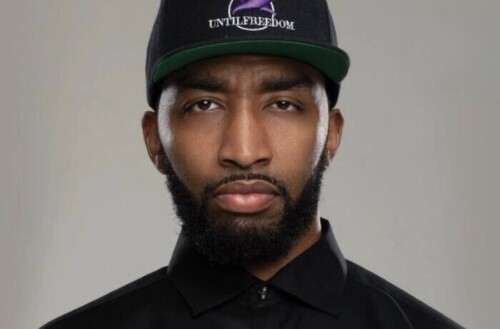
Mysonne’s early career positioned him inside an important era of New York hip-hop. His reputation as a battle rapper and recording artist grew, and the trajectory suggested the possibility of a much larger commercial career.
Then incarceration interrupted that timeline.
And “interrupted” almost feels too gentle a word.
When someone loses years during a period when his career is supposed to be accelerating, he doesn’t merely lose calendar pages.
He loses momentum.
Relationships evolve.
Executives change.
Labels restructure.
Artists emerge.
Sounds transform.
Technology changes.
Radio changes.
Fashion changes.
Neighborhoods change.
The audience changes.
And music is particularly unforgiving because culture does not stop to wait for anyone.
The train keeps moving.
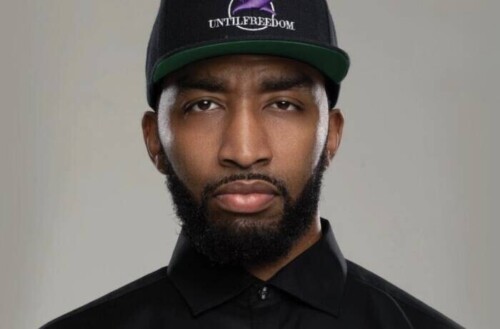
That reality gives enormous weight to the episode’s discussion of incarceration and rebuilding. The official description specifically highlights Mysonne overcoming incarceration and transforming adversity into motivation for the next generation.
The easy version of that story is:
He went away.
He came home.
He rebuilt.
But anyone who has ever lost years to circumstances, consequences, illness, grief, incarceration, addiction, financial disaster, family responsibility or simply bad decisions knows the harder truth.
Coming back doesn’t return you to the place where you left.
Coming back returns you to whatever exists now.
And then you have to figure out who you are in it.
WHAT HAPPENS WHEN THE WORLD DOESN’T WAIT FOR YOU?
This may be one of the deepest questions contained inside Mysonne’s story, even beyond what is said explicitly.
Imagine being young.
Talented.
Hungry.
Recognized.
Your name is circulating.
People believe something is about to happen.
Then life closes the door.
Years pass.
When the door opens again, the room has changed.
What would you do?
Spend the rest of your life demanding the old room come back?
Blame everyone?
Attempt to recreate the younger version of yourself?
Or accept that the future you once expected may no longer exist—and build a new one?
That is where Mysonne’s life becomes bigger than music.
Because almost everybody will eventually experience some version of this question.
Maybe your interruption isn’t prison.
Maybe it is divorce.
Maybe a business fails.
Maybe someone dies.
Maybe you lose the job that defined you.
Maybe you invest everything into a dream that doesn’t work.
Maybe the industry changes.
Maybe somebody chooses someone else.
Maybe you simply wake up at 40 and realize the life you imagined at 20 isn’t coming.
Then what?
Who are you when Plan A becomes history?
Mysonne’s story answers:
You build from where you are.
THE RETURN IS ONLY THE BEGINNING
Mysonne’s transformation matters.
He didn’t simply attempt to restart a paused career.
His public identity expanded into activism and community work.
That means the central narrative isn’t:
Mysonne got his old life back.
It’s more interesting:
Mysonne built another life.
THE MIC BECAME SOMETHING DIFFERENT
There is a poetic continuity in Mysonne’s story.
He never really stopped using his voice.
The purpose of the voice changed.
For a battle MC, the microphone is competition.
For a recording artist, the microphone is expression.
For an entertainer, the microphone is livelihood.
For an activist, the microphone can become advocacy.
For a mentor, it can become instruction.
For a father, sometimes the microphone isn’t a microphone at all.
It is the conversation at home.
The example.
The decision.
The behavior a child watches.
That evolution is central to why the ROC Solid interview works.
The episode isn’t merely documenting an artist’s career.
It is documenting the changing meaning of his voice.
FATHERHOOD MAY BE ONE OF THE MOST IMPORTANT SUBJECTS IN THE ROOM
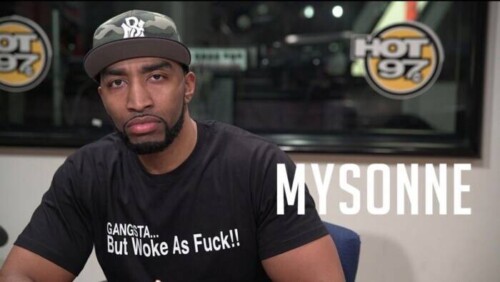
The episode description identifies fatherhood among the subjects Bleek and Mysonne discuss.
That word deserves more attention than it usually receives in music journalism.
Hip-hop has traditionally measured legacy through records.
Albums.
Tours.
Sales.
Charts.
Classic verses.
Influence.
Awards.
But fatherhood introduces another measurement.
Who did your children experience you as?
Suddenly the definition of legacy becomes uncomfortable.
A platinum plaque can’t answer that question.
Neither can followers.
Neither can money.
Neither can street reputation.
You can have millions of people who believe they know you and children at home who actually do.
That changes the meaning of “solid.”
When men are young, being solid can be associated with toughness, loyalty, fearlessness and reputation.
As life develops, the word becomes more demanding.
Can people depend on you?
Do you keep promises?
Do you provide?
Do you teach?
Do you admit when you were wrong?
Can your children learn from your victories without inheriting your mistakes?
That is grown-man solidity.
And a platform like ROC Solid becomes more valuable when it creates room for that evolution.
HIP-HOP’S MEN ARE ALLOWED TO GROW UP
This should not be a radical statement.
But sometimes hip-hop culture behaves as if growth creates an authenticity problem.
Audiences meet a rapper at 21 and expect him to remain psychologically 21 forever.
If he talked about violence then, they expect violence now.
If he was reckless then, recklessness becomes his brand.
If anger made him famous, peace can seem commercially inconvenient.
Think about how strange that is.
Nobody should be exactly the same person at 45 that he was at 19.
If you are, something went wrong.
Growth isn’t betrayal.
Growth is evidence that experience did something.
The ROC Solid conversation with Mysonne becomes interesting precisely because it allows the guest to exist as the man he is now without pretending the younger man never existed.
The two can coexist.
That was me.
And:
This is me.
Both can be true.
AUTHENTICITY DOESN’T MEAN STAYING TRAPPED
The episode also addresses authenticity and staying true to principles.
Hip-hop uses “real” so frequently that the word can become meaningless.
Real to what?
Your neighborhood?
Your lyrics?
Your reputation?
Your younger self?
Your audience’s expectations?
Mysonne’s story introduces a more mature definition.
Authenticity can mean refusing to lie about where you came from while also refusing to let where you came from dictate where you finish.
You don’t have to sanitize your history.
But you don’t have to worship it either.
That distinction matters enormously.
Especially when younger people are watching.
WHEN STREET STORIES BECOME STREET INSTRUCTIONS
The episode examines growing up in New York and the evolution of street culture.
This is one of the areas where Mysonne and Memphis Bleek’s shared cultural background becomes valuable.
They aren’t academics observing the phenomenon from a distance.
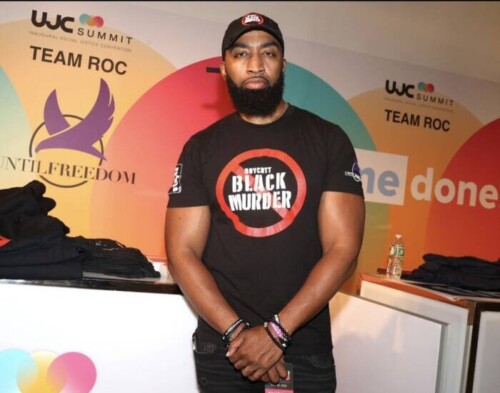
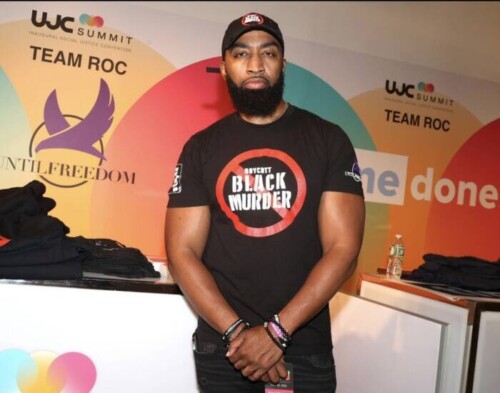
They are men who came of age close enough to that world to understand its language.
And with age comes an opportunity to do something younger men often cannot:
Separate nostalgia from wisdom.
Every generation romanticizes pieces of its youth.
Music sounded better.
Parties were better.
People dressed better.
The city was better.
The streets were more authentic.
But memory edits.
It remembers excitement and sometimes softens consequences.
That becomes dangerous when older men sell younger men the mythology of the streets without telling them the invoice eventually arrives.
If you survived an environment, the responsibility isn’t to convince the next generation that everything about it was glorious.
Sometimes your responsibility is to tell them what it cost.
That’s where mentorship matters.
The story stops being entertainment and becomes information.
EXPERIENCE IS ONLY VALUABLE IF SOMEBODY CAN USE IT
What is the value of surviving something if the only lesson you offer the next person is how impressive your survival was?
That’s a serious question.
Because hip-hop has spent decades rewarding testimony.
Artists describe what happened.
The audience listens.
But mentorship asks for something beyond testimony.
It asks:
What did you learn?
What should the next person avoid?
What do you wish somebody told you?
What would you do differently?
What mattered less than you thought?
What mattered more?
The official episode description highlights Mysonne giving back and mentoring youth.
That is the natural destination of experience.
You turn scars into directions.
MYSONNE’S ACTIVISM CHANGES HOW WE HEAR HIS RAP HISTORY
Mysonne’s later identity as an activist shouldn’t be treated as an unrelated second career.
It changes the way his entire story can be interpreted.
A battle rapper learns how to argue.
An MC learns how to communicate.
A performer learns how to command a room.
A man who experiences incarceration learns firsthand what institutions feel like from inside them.
A father learns that decisions have consequences beyond himself.
A community leader learns that being right isn’t enough—you have to move people.
Put those experiences together and activism starts to look less like an unexpected turn.
It looks like a convergence.
The tools were accumulating all along. Make sure you tune into this powerful conversation only on ROC Solid Podcast!
For more inquiries about “ROC Solid Podcast”, contact The Misty TV Firm Corporation via email: [email protected]
The Misty TV Firm Corporation Instagram IG: @themistytv
Memphis Bleek Instagram IG: @memphisbleek
Mysonne Instagram IG: @mysonnenygeneral
ROC Solid Podcast Mysonne Video Link:
© 2026, Logan. All rights reserved.
