

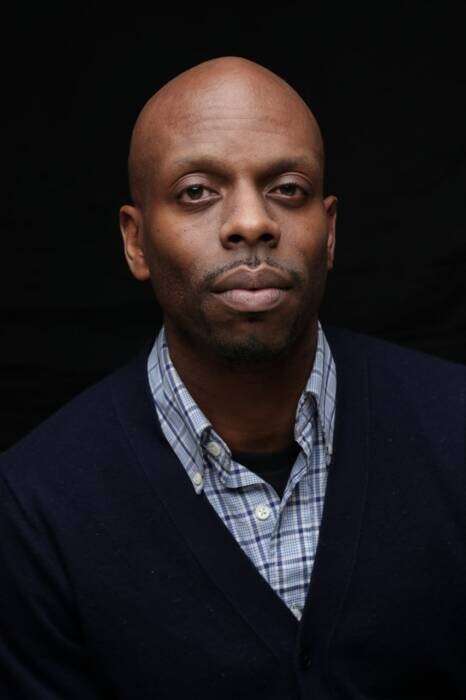
Extended Q&A with Paul Ogunmefun
Co-Managing Partner
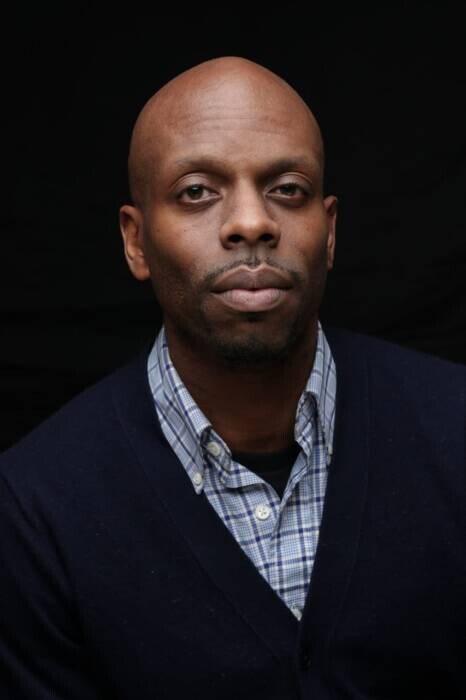
During the midst of all the chatter, what better way to learn about music catalogs than directly from someone who helps acquires them? The following questions address the artist-facing side of catalog transactions — the preparation gap, the documentation discipline, and what Melodofi’s dual-sided model means in practice for independent artists and the IP attorneys advising them.
Q1. Catalog conversations have become huge in music lately, but a lot of the online discussion still reduces them to ‘cashing out.’ From your perspective, what’s the biggest misunderstanding people still have about why artists enter these deals?
The ‘cashing out’ frame is lazy journalism and it does real damage to artists who are listening to it. It implies defeat — like selling means you ran out of options or you didn’t believe in your own work anymore. That’s almost never what’s actually happening.
The artists who enter catalog transactions thoughtfully are making a capital allocation decision. They’re saying: I have significant wealth locked in an illiquid asset — my IP — and I want to redeploy some of that capital into something with a different risk profile. Real estate. A business. Generational wealth for their family. A war chest to fund their next creative phase without label debt attached to it. That’s not cashing out. That’s sophisticated portfolio thinking.
The other thing people miss is that a catalog sale doesn’t have to be all-or-nothing. You can sell a percentage. You can retain creative approval rights. You can structure a deal that gives you liquidity today and participation in upside tomorrow. The instrument is far more flexible than the headline version of this story suggests. What ‘cashing out’ actually looks like is an artist who didn’t prepare, didn’t have the right representation, and took the first number someone put in front of them. That’s a different conversation — and it’s the one we’re trying to make less common.
Q2. You talk a lot about preparation before a deal ever happens. What’s one thing independent artists should be doing now that most people ignore until money is already on the table?
“The documentation habits you build in the first five years of your career determine the deal you’ll be able to do in year fifteen.”
Split sheet hygiene. Full stop.
I cannot tell you how many catalog conversations we’ve had where the artist doesn’t have a signed split sheet for songs that have generated hundreds of thousands of dollars in royalties. Unsigned splits are extraordinarily common and extraordinarily disruptive — to a transaction, to a valuation, and to the artist’s actual ability to monetize what they created.
Here’s what that actually looks like in practice: you wrote a song with two other people four years ago. It’s your biggest streaming record. None of you signed anything because you were all friends and it felt transactional to formalize it. Now a buyer is doing due diligence, and they can’t confirm ownership of a material portion of your catalog. That deal either dies, or the valuation drops to account for the encumbrance risk. Years of income, gone or discounted, because of a document that takes twenty minutes to execute.
The documentation habits you build in the first five years of your career determine the deal you’ll be able to do in year fifteen. I’ve watched that play out enough times that it stopped surprising me. What still surprises me is how rarely anyone tells emerging artists that until they’re already sitting at a table where it matters.
Q3. A lot of younger artists think streaming numbers alone make a catalog valuable. From what Melodofi sees during due diligence, what actually separates a valuable catalog from one that looks good online but falls apart legally?
“A catalog with ten million monthly listeners but three uncleared samples and two missing co-writer signatures is not a $2M asset. It’s a liability portfolio with a good Spotify profile.”
Streaming numbers are marketing. They’re not ownership. And the distance between those two things is where most of the risk lives.
What we look for in due diligence is documentation infrastructure. Clean chain of title — can you prove, at every point in the history of these recordings, who owned what and under what agreement? Registered compositions — are these works actually filed with the PROs, or are there performance royalties sitting uncollected because nobody did the administrative work? Resolved encumbrances — are there sample clearances that never happened, co-writers who were never paid, advances still on the books from a deal that dissolved five years ago?
A catalog with ten million monthly listeners but three uncleared samples and two missing co-writer signatures is not a $2M asset. It’s a liability portfolio with a good Spotify profile. We’ve walked away from catalogs that looked exceptional online because the legal architecture underneath them was a series of problems waiting to be triggered.
The inverse is also true. We’ve evaluated catalogs with modest streaming footprints that were immaculately documented, cleanly registered, and entirely free of encumbrances — and they commanded strong multiples because any sophisticated buyer could look at them and immediately understand what they were acquiring. Clean documentation isn’t just a legal requirement. It’s a negotiating asset.
Q4. Fans usually hear ‘catalog sale’ and assume an artist lost control of everything overnight. In reality, how much more structured and customizable can these deals actually be behind the scenes?
The public version of this story is almost always a caricature of what actually happened. The reality is that these are negotiated instruments with a significant amount of structural flexibility — if you’re prepared and you have the right people at the table.
You can sell a defined percentage of your catalog and retain the rest. You can negotiate creative approval rights so that your music can’t be used in contexts you haven’t sanctioned. You can build in reversion clauses — conditions under which ownership returns to you. You can structure participation in future upside, so if the catalog appreciates in value beyond the purchase price, you’re still participating in that growth. You can retain synchronization approval rights, which means a brand can’t license your music for a commercial without your sign-off.
The deal that gets made is a function of leverage, preparation, and who you have representing your interests. Artists who come to the table with clean documentation, a clear understanding of what they own, and a minimum number they’ve thought through carefully — those artists have leverage. They’re not price-takers. They can negotiate structure. The artists who don’t have those things take whatever the first term sheet offers and call their lawyer after they’ve already signed something.
That’s the preparation gap. And closing it is a significant part of what we do at Melodofi before a transaction ever formally begins.
Q5. You work closely with artists before transactions are finalized. What are some warning signs that tell you an artist may not fully understand their own rights or the type of deal they’re walking into?
“If an artist describes what they own as simply ‘my music,’ that’s a signal that some foundational education has to happen before we can have a transaction conversation.”
The clearest one: they can’t tell you the difference between their publishing and their masters. Those are two parallel systems — composition rights and sound recording rights — that operate under entirely different legal frameworks, flow through different royalty channels, and are valued by different methodologies. If an artist describes what they own as simply ‘my music,’ that’s a signal that some foundational education has to happen before we can have a transaction conversation.
Second warning sign: they’ve never pulled their own PRO statement. If you don’t know what your ASCAP or BMI account shows — what’s registered, what’s generating, what’s missing — you haven’t inventoried the asset you’re trying to sell. That’s the equivalent of listing a house without knowing the square footage.
Third, and this one is more behavioral than technical: they’re in a hurry. An artist who’s emotionally urgent about closing quickly, who doesn’t want to slow down for documentation review or audit, is usually operating from financial pressure rather than strategic intent. Urgency is the enemy of good deal-making. We’ve had conversations where the right answer was: come back in six months, fix these three things, and you’ll be in a meaningfully stronger position. Some artists hear that and do the work. Others go find someone who’ll move faster — and that transaction usually reflects it.
Q6. Melodofi doesn’t just operate in catalog transactions — you also have backend label infrastructure supporting artists. How does having that side of the business help you better understand what artists actually need beyond just closing a deal?
It forces us to think in terms of artist careers rather than individual transactions. That’s a different orientation, and it changes the advice we give.
A catalog transaction is a moment in time. A career is a decade or two of decisions about ownership, distribution, revenue structure, and creative direction — and the decisions you make at 28 shape what’s available to you at 42. If we only operate in transactions, we optimize for the deal. Having label infrastructure means we’re thinking about what comes before the deal and what comes after it.
In practice, it means we can support upcoming releases, help build the streaming and sync footprint that increases catalog value before a buyer ever comes to the table. It means we can position an artist’s new work in a way that strengthens the asset they’re trying to monetize rather than competing with it. For artists who want to stay independent, we can help build the operational infrastructure that makes independence financially viable at scale — distribution through Bungalo, revenue diversification, brand partnership development.
The goal is to account for what the artist actually needs — not just what the market is offering in this moment. Sometimes the right answer is: yes, transact now. Sometimes it’s: give us eighteen months, build the catalog’s documentation and streaming base, and you’ll close at a significantly higher multiple. We can only have that second conversation honestly if we have the infrastructure to support it. That’s what the label side gives us.
Q7. As catalog conversations continue getting louder across music — especially in hip-hop — what’s the main thing you hope artists walk away understanding about catalogs and Melodofi in general, especially the ones trying to build something that lasts beyond the moment?
“Ownership is infrastructure, not ideology.”
That ownership is infrastructure, not ideology.
The conversation about artists owning their work has been going for decades — Prince, Nipsey, Taylor, and a hundred others who never made the front page. What’s different now is that the financial markets have caught up. Institutional capital has validated what artists have been saying since the beginning: that a great song is a durable asset. It doesn’t depreciate because the economy turns. It doesn’t stop generating because the moment passed. It compounds — in sync licensing, in streaming, in the cultural value that keeps accumulating around work that meant something.
Hip-hop specifically is sitting on catalogs that are still being structurally undervalued relative to their cultural weight. The sample-heavy nature of the music creates documentation complexity, which creates risk discounts from buyers who don’t know how to navigate it. That gap is an opportunity for artists who understand it and a trap for artists who don’t.
What I want artists to walk away understanding is this: the deal you’ll be able to do in ten years is being determined right now, by the documentation habits you’re building or not building, the split sheets you’re signing or not signing, the PRO registrations you’re filing or not filing. The catalog conversation isn’t happening in a boardroom somewhere far from you. It’s happening in the studio, every time you finish a song and don’t document who wrote what.
Melodofi exists to be the infrastructure for artists who want to build something that outlasts the moment. We’re not here to push anyone toward a transaction that works better for us than for them. We earn on what we achieve above your floor — which means our interest is exactly aligned with yours. When you win, we win. That’s the only model we know how to operate inside.
© 2026, alanna. All rights reserved.
