


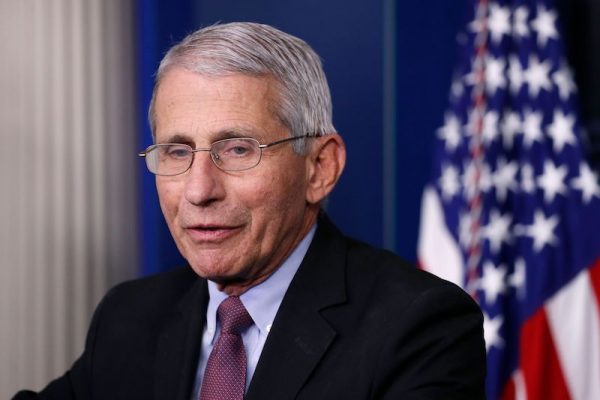
More than six years after the COVID 19 pandemic forever changed the world, Dr. Anthony Fauci once again found himself at the center of a political firestorm on Capitol Hill.
Appearing Wednesday before the Senate Homeland Security and Governmental Affairs Committee under subpoena, the former director of the National Institute of Allergy and Infectious Diseases repeatedly invoked his Fifth Amendment right against self incrimination, declining to answer questions during a contentious hearing led by committee chairman Sen. Rand Paul (R Ky.).
“Although it pains me to do so, because of the respect I have for the legislative branch, and my decades long record of cooperating with Congress, under the advice of my attorneys I will invoke my right under the Fifth Amendment of the Constitution to refrain from answering your questions,” Fauci said at the outset of the hearing.
The hearing centered on the origins of COVID 19, including Republican allegations surrounding federal funding of coronavirus research connected to the Wuhan Institute of Virology and longstanding claims that Fauci misled lawmakers during previous congressional testimony. Those allegations have been repeatedly denied by Fauci, who has maintained that the available scientific evidence has supported a natural origin of the virus, while acknowledging that scientists initially examined multiple possible scenarios during the early days of the pandemic.
The hearing marked the latest chapter in Fauci’s years long clash with Sen. Paul, who has repeatedly accused the longtime infectious disease expert of misleading Congress and has publicly called for his prosecution. Earlier this week, Paul released more than 1,000 pages of Fauci’s personal pandemic era diary entries ahead of the hearing, arguing the documents raised new questions about the government’s response to COVID 19 and discussions surrounding the virus’s origins.
Rather than answer questions, Fauci explained that his decision was based on legal advice and what he described as an ongoing effort to criminalize his public service.
According to multiple reports, Fauci accused Paul of conducting a years long campaign designed to provoke testimony that could later be used against him in court, referring to the senator’s pursuit as an “unhinged obsession.” The hearing quickly grew tense, with Paul’s committee removing one of Fauci’s attorneys after the lawyer attempted to interject during questioning. Paul later warned that Fauci could face contempt proceedings over his refusal to testify.
The Fifth Amendment to the U.S. Constitution protects individuals from being compelled to provide testimony that could potentially incriminate them in a criminal proceeding. Legal experts have noted that invoking the Fifth Amendment is a constitutional protection and, by itself, does not establish guilt or innocence.
The hearing also reignited debate over the presidential pardon Fauci received from former President Joe Biden before leaving office. Republican lawmakers questioned whether that pardon eliminated any legal risk, while Fauci’s attorneys maintained there remained sufficient legal concerns to justify invoking his constitutional rights.
Democratic members of the committee sharply criticized the hearing, arguing it had become more about political retribution than legislative oversight. They defended Fauci’s decades of public service and warned that aggressively targeting government scientists could discourage future public health experts from serving during national emergencies. At the same time, Republicans argued that Congress has an obligation to fully investigate the government’s response to the pandemic and determine whether mistakes or misconduct occurred.
Fauci, who retired from government service in 2022 after leading NIAID for nearly four decades, became one of the most recognizable public officials in America during the COVID 19 pandemic. His guidance on vaccines, masking and public health measures made him a trusted figure for many Americans while also turning him into one of the nation’s most polarizing public health officials.
Whether Wednesday’s hearing ultimately produces new evidence remains to be seen. What is certain is that the political battle over the origins of COVID 19 and the government’s handling of the pandemic continues to play out years after the public health crisis officially subsided.
