

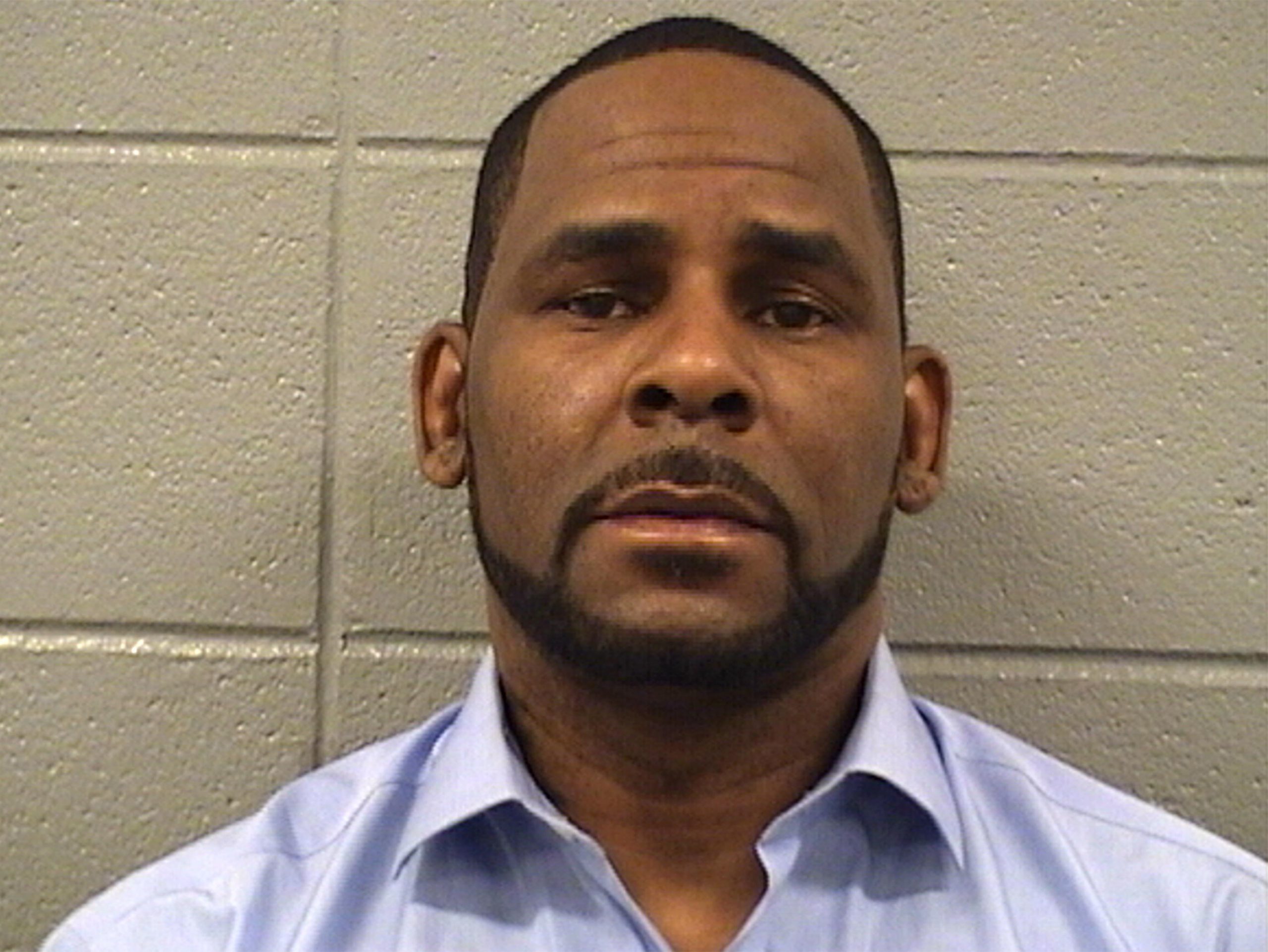
Disgraced R&B singer R. Kelly has officially turned to executive clemency in his ongoing effort to secure an early release from federal prison. According to records that surfaced this week on the U.S. Department of Justice’s website, the 59-year-old artist has submitted a formal petition to President Donald Trump asking to commute his 30-year prison sentence.
The application is currently listed as “pending” before the Department of Justice’s Office of the Pardon Attorney. Notably, the filing stops short of requesting a full presidential pardon; instead, Kelly is seeking a commutation, which would reduce or altogether end his remaining time behind bars without erasing his underlying criminal convictions.
Multiple Convictions and a 2045 Release Date
Kelly, born Robert Sylvester Kelly, is currently serving his time at a federal correctional facility in North Carolina. His incarceration stems from consecutive, high-profile federal trials:
- New York (2021): A Brooklyn jury found Kelly guilty on nine counts, including racketeering and severe violations of the Mann Act, detailing a decades-long pattern of sex trafficking, kidnapping, and exploitation. He was sentenced to 30 years in prison in 2022.
- Chicago (2022): Kelly faced a separate federal trial in his hometown, resulting in a conviction on multiple child pornography and sex abuse charges, adding a 20-year sentence (with all but one year running concurrently to his New York sentence).
Barring an executive intervention or a successful standard legal appeal, Kelly’s current projected release date is set for 2045, at which point he will be nearly 79 years old.
Claims of Prison Threats and Inmate Plots
While the specific supporting materials for this newly surfaced clemency application remain sealed from public view, the request follows a series of unconventional maneuvers from Kelly’s defense team outside standard appellate channels.
His attorney, Beau Brindley, previously filed emergency motions pushing for Kelly’s release, arguing that the singer’s life was in imminent danger while in custody. The defense team’s prior filings alleged that correctional staff had intercepted Kelly’s mail to pressure witnesses and had gone so far as to approach a terminally ill inmate—a self-identified white supremacist—offering him his freedom in exchange for murdering Kelly. Additionally, his legal team argued that the singer was being denied adequate medical treatment for dangerous blood clots in his lungs, using these overlapping safety concerns to justify a direct plea for presidential intervention.
White House Responds to Public Portal Request
Despite the sudden traction the filing has gained across social media and news outlets, the administration has signalized that the submission did not stem from high-level backchannel negotiations.
When reached for comment regarding the active petition, a White House official downplayed the political weight of the filing, stating:
“This appears to be a random submission through the public portal which anyone can submit an application through. The submission of a pardon request should not be taken as an indication of administrative favor.”
The Office of the Pardon Attorney will continue its standard advisory review of the case, though the U.S. Constitution ultimately grants the president the sole, absolute authority to accept, modify, or reject federal clemency applications.
