
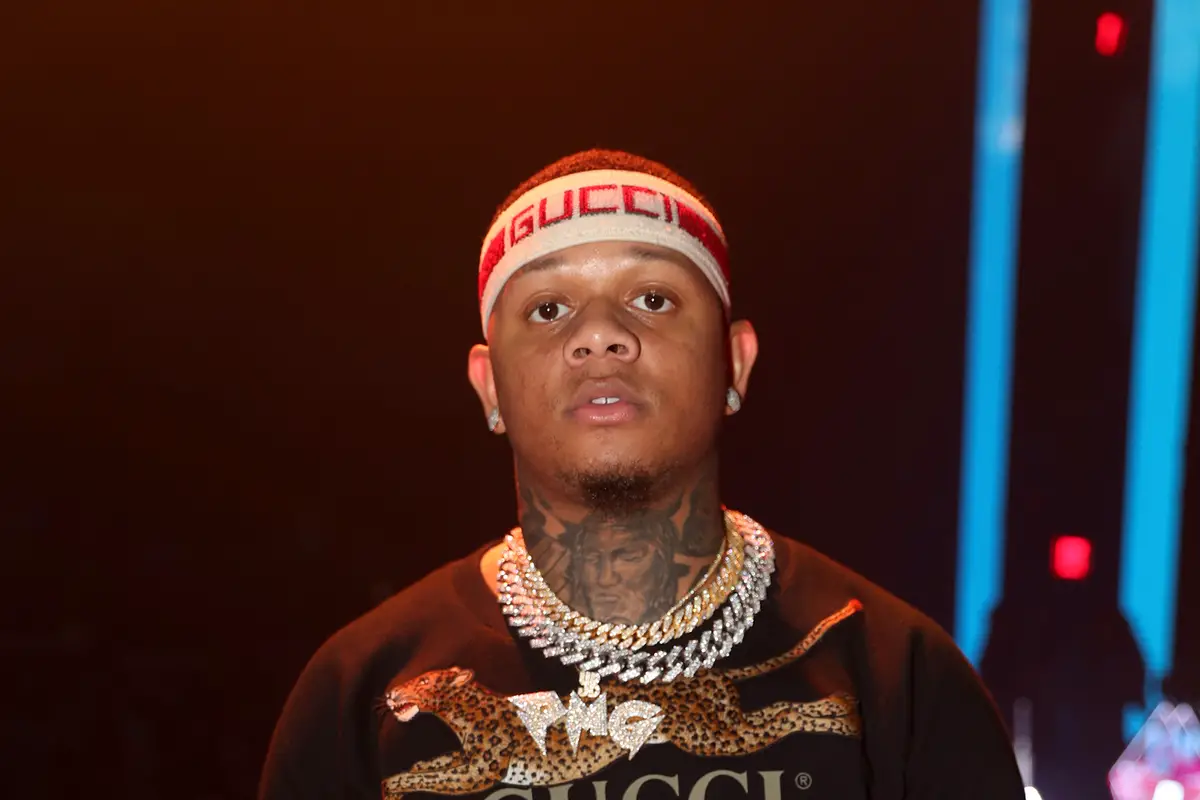
Yella Beezy’s defense team battles prosecutors over whether unreleased rap songs can be used as evidence in his capital murder trial.
Yella Beezy is facing a courtroom battle that goes way beyond the typical murder charge.
His legal team is mounting an aggressive defense against prosecutors who want to use his unreleased rap tracks as evidence of guilt, claiming the music amounts to nothing more than artistic expression being weaponized against him in a capital murder trial.
The Dallas rapper, born Markies Conway, stands accused of orchestrating the 2020 death of rival rapper Mo3 through a murder-for-hire scheme.
The prosecution wants to flood the jury with songs like “Take 3” and “Gas’d Up” to prove motive and conspiracy.
Join Us
AllHipHop’s Daily News Service
Delivering news to inboxes since 1999. We break it. They take it. Get it first, straight from AllHipHop.
The feud between Yella Beezy and Mo3 wasn’t some underground beef that stayed in the studio.
It played out across social media, through media interviews, and in the streets of Dallas for years before Mo3’s life ended.
On November 11, 2020, Mo3, whose real name was Melvin Noble, was ambushed and shot on Interstate 35 in broad daylight. Kewon Dontrell White was arrested and charged with the actual murder, and he’s also facing federal weapons charges for being a prohibited person in possession of a firearm.
White was sentenced to almost nine years for the gun crime, but prosecutors now argue that Yella Beezy paid him to pull the trigger.
During a pre-trial hearing, the prosecution laid out its theory to the judge.
“This case concerns a rap feud, your honor, between known Dallas rappers. Their feud was open. It was public. It was in social media. It was in their media interviews. It was through their music. And it was in the streets of Dallas,” the prosecutor told the court. “This offense did not happen in a vacuum. And the jury is entitled to hear about what transpired that led to one Dallas rapper placing a bounty on another Dallas rapper.”
The state claims “Take 3” was sent via text to a co-defendant the day Mo3 was killed, and “Gas’d Up” was composed days after the murder.
But Conway’s defense team is fighting back hard, arguing that using rap lyrics as evidence violates his First Amendment rights and unfairly prejudices jurors.
“It’s important for the court, your honor, to distinguish between words and deeds and between ideas and conduct. What the rap music in this case are words and deeds of Mr. Conway. This is what he does for a living,” the defense attorney said. “Using someone’s art in the guilt innocence phase of a trial only as character evidence has the potential of being unfairly prejuditial..That’s exactly what the state’s trying to do in this case, your honor.”
The defense also challenged Detective Barnes’ credibility, pointing out that he turned to YouTube to find evidence that matched his theory rather than relying on street sources.
According to court records, the judge will decide which songs can be presented to the jury, and this case mirrors similar legal battles across the country about whether rap music belongs in criminal proceedings.
Yella Beezy’s trial is scheduled to begin in August 2026, and the outcome could set a precedent for how courts handle artistic expression in future cases.
